Dental veneers can change the visible shape, color, and proportions of your smile, but choosing veneers should involve more than selecting the brightest shade or the most dramatic photo. Porcelain, composite resin, conservative preparation, bite forces, enamel, and your long-term goals all matter. The right plan is the one that fits your teeth and your life.
Schedule a dental veneers consultation with Advanced Cosmetic and Implant Dentistry.
This guide explains how to compare the main options and what a specialist should evaluate before recommending treatment. It is educational information, not a diagnosis. A personal examination is necessary to determine whether veneers, bonding, whitening, orthodontics, a crown, or no treatment is the most appropriate choice.
The best candidates for dental veneers generally have healthy teeth and gums, realistic cosmetic goals, and enough sound tooth structure to support the planned restoration. Cavities, active gum disease, heavy untreated grinding, or a bite that overloads the proposed veneers may need attention first. A material choice comes after this evaluation.
Veneers are cosmetic restorations that cover the visible surface of a tooth. They may help address discoloration that does not respond to whitening, small chips, minor shape differences, selected gaps, or uneven proportions. They are not a universal repair for every dental problem. The Cleveland Clinic explains that veneers are cosmetic and that significant cavities or gum disease should be addressed before treatment.
During a candidacy evaluation, a prosthodontist should consider:
These questions help prevent a common mistake: choosing a veneer because it looks attractive in isolation, without checking whether the tooth, gums, and bite can support it. At Advanced Cosmetic and Implant Dentistry, board-certified prosthodontists Dr. Avinash S. Bidra and Dr. Xiao Chun Li use a specialist-led evaluation to match treatment to the patient's anatomy and goals.
Porcelain and composite dental veneers can both improve the appearance of front teeth, but they behave differently. Porcelain is fabricated outside the mouth and is known for a highly esthetic, stain-resistant surface. Composite resin is shaped directly or indirectly with tooth-colored material and may be easier to repair. The better choice depends on diagnosis, design, bite, priorities, and maintenance.
There is no responsible one-material answer for every smile. The American Dental Association notes that indirect restorative materials are selected according to their composition, properties, processing method, and clinical indication. In practical terms, a specialist should compare the material with the tooth being treated, the amount of change desired, and the forces that restoration will experience.
| Option | May suit patients who want | Important considerations |
|---|---|---|
| Porcelain veneers | A custom indirect restoration with a natural-looking, light-reflective surface and strong stain resistance. | They require careful planning, a controlled bonding process, and an appropriate enamel and bite foundation. They are not a substitute for a crown when a tooth needs full-coverage protection. |
| Composite veneers | A tooth-colored resin option with direct customization and the possibility of localized repair or reshaping. | Surface roughness, color change, marginal discoloration, wear, and maintenance may be part of the long-term discussion. The result depends heavily on design, technique, finishing, and care. |
| Limited bonding | A focused change to one small chip, edge, gap, or shape concern without veneer-style coverage across several teeth. | It may be more treatment than you need, or less than you need, depending on the scope of the smile change. It should be planned rather than selected only because it is quick. |
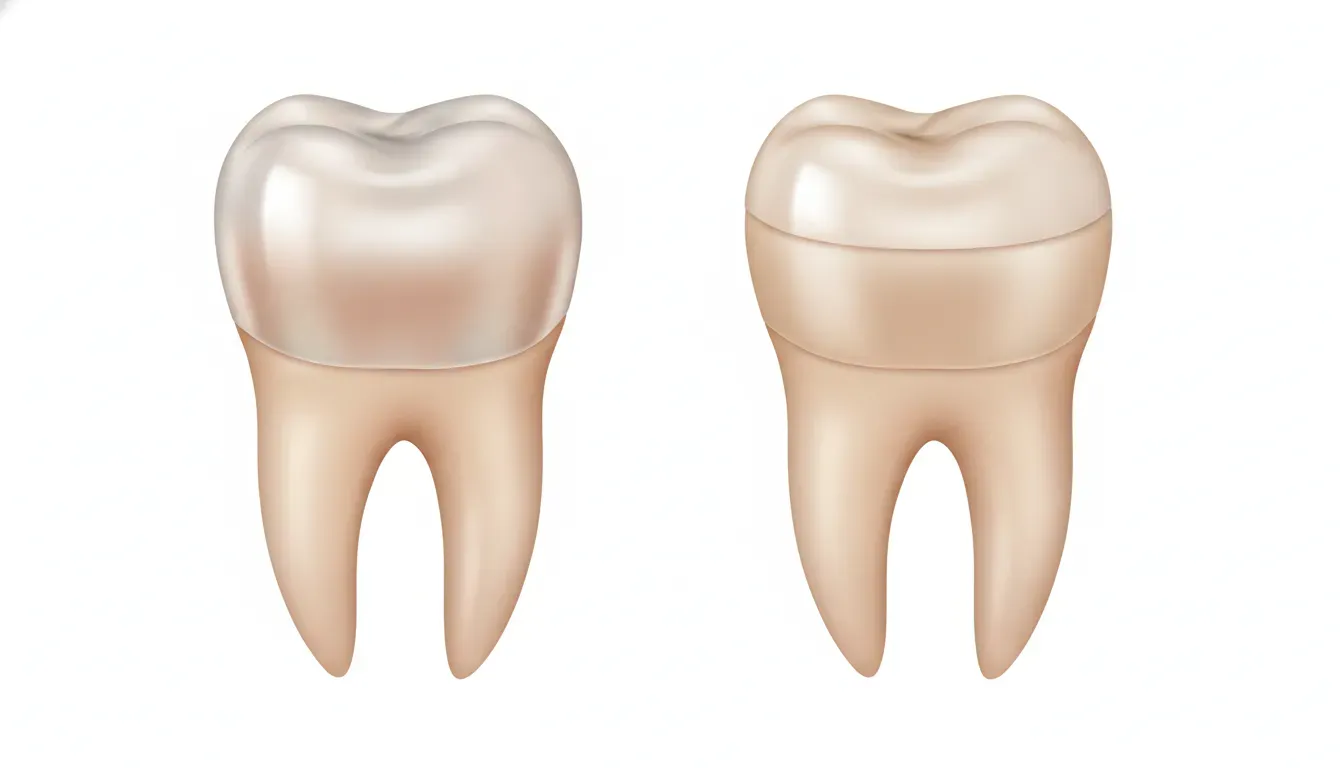
A 2023 systematic review and meta-analysis of resin composite laminate veneers reported common complications including surface roughness, color mismatch, and marginal discoloration, while a 2024 systematic review examined ceramic veneer survival and complications across different bonding substrates. These reviews support a balanced conversation: material matters, but the substrate, bonding, design, and follow-up matter too.
Patients considering the full range of veneer treatment options in Glastonbury can bring focused questions about porcelain, composite, preparation, and maintenance to a consultation.
Explore porcelain veneer treatment and candidacy at Advanced Cosmetic and Implant Dentistry.
Conservative veneer preparation means preserving healthy tooth structure while creating the space and geometry needed for a secure, natural-looking restoration. It does not always mean no preparation. The correct amount depends on tooth position, enamel thickness, color, shape, bite, and the planned result. A no-prep promise should never replace a clinical evaluation.
Patients often hear the phrase "no-prep veneers" and assume that less preparation is automatically safer. That is too simple. If a veneer adds thickness without enough room, the result can look bulky, affect the gumline, or change how the teeth contact. If a clinician removes more tooth structure than the plan requires, the treatment may be unnecessarily aggressive. The goal is controlled, case-specific preparation.
A systematic review comparing conventional and minimally invasive veneers found promising outcomes for minimal or no-preparation approaches, while also emphasizing patient selection, preparation design, material properties, and technical precision. The finding does not mean that every patient is a candidate for a no-prep approach. Tooth position, existing restorations, enamel availability, shade, and the desired contour all influence the decision.
Ask these preparation questions before treatment:
A conservative plan is not defined by a marketing label. It is defined by preserving sound structure, respecting periodontal health, creating a stable bond, and designing a result that looks and functions naturally.
Smile design connects the veneers to your face, lips, gums, speech, and bite instead of treating each tooth as an isolated white shape. A careful plan considers tooth width, length, midline, smile arc, shade, translucency, gum display, and upper-to-lower tooth contacts. These details help the result look intentional and natural.
Two patients can request the same shade and receive very different appropriate designs. Tooth length may need to relate to lip movement. The width of one tooth may need to balance neighboring teeth. The incisal edges should support the smile arc rather than create a flat row. The final shade should account for surrounding teeth, skin tone, lighting, and whether whitening is planned first.
Bite analysis is equally important. Veneers are thin, but they still experience forces when you chew, speak, clench, or grind. A design that ignores the bite can increase the risk of chipping, debonding, discomfort, or premature maintenance. A specialist may recommend a diagnostic preview, temporary design, or protective appliance when appropriate. The exact approach depends on the examination and treatment plan.

Rather than asking only, "How white can my veneers be?" ask, "How will this design fit my face, teeth, gums, bite, and daily habits?" That question shifts the decision from a generic cosmetic shortcut to a personalized restorative plan.
Dental veneer longevity varies because it depends on the material, enamel and bonding substrate, bite forces, preparation, technique, oral hygiene, diet, and follow-up. Porcelain and composite should not be promised a single universal lifespan. A realistic consultation explains likely maintenance, what can be repaired, and what habits or conditions could shorten service.
Porcelain veneers are often chosen for their natural optical qualities and resistance to surface staining, but porcelain can still fracture or debond. Composite may be more repairable in some situations, yet it can require polishing, repair, or replacement as the surface and margins change. Neither option is maintenance-free, and neither protects a tooth from decay around an unclean margin.
Longevity begins before placement. Sound enamel, accurate fit, thoughtful occlusion, good moisture control, and a design that does not ask the restoration to do more than it should all support a better long-term outlook. The 2024 ceramic veneer review specifically evaluated survival and complications in relation to bonding substrates, which reinforces why the tooth-restoration interface matters.
After treatment, protect your investment by:
For a broader cosmetic plan, review ACAID's cosmetic dentistry services. If the concern is a small isolated chip or gap, dental bonding may also be part of the conversation. If the desired change involves multiple cosmetic concerns, a smile makeover consultation may help define the appropriate scope.
Before choosing dental veneers, ask who will diagnose your candidacy, how the plan protects enamel, how the bite will be evaluated, why a material is recommended, what alternatives exist, and how maintenance will be handled. The best consultation gives you a clear reason for the recommendation, not just a material name or a shade.
These questions are especially important when treatment is elective and irreversible changes may be involved. A specialist-led plan should make the tradeoffs understandable so you can make an informed decision without pressure.
Request a personalized dental veneers consultation in Glastonbury.
Dental veneers can be an excellent cosmetic option for selected patients, but they are not interchangeable with crowns, bonding, whitening, or orthodontics. The right choice depends on healthy supporting tissues, enamel, bite, smile design, material properties, and maintenance expectations. A consultation is the safest way to compare those options.
Dental veneers are intended as long-term restorations, but they are not indestructible or guaranteed to last forever. Their service can be affected by bonding, enamel, bite forces, grinding, oral hygiene, trauma, and material. Ask how the proposed treatment changes the tooth and what future maintenance could involve.
Neither is universally better. Porcelain may offer a highly esthetic, stain-resistant indirect surface, while composite can offer direct customization and repair options in selected cases. The appropriate material depends on your teeth, bite, goals, desired scope, and willingness to maintain the result.
Veneers should be planned to preserve healthy tooth structure whenever clinically possible, but some cases require preparation to create the correct space and contour. Veneers are not automatically harmful or automatically risk-free. The key questions are whether the tooth is healthy, why preparation is needed, and how the design fits the bite.
Some patients may be candidates for minimal-preparation or no-preparation designs, but not everyone is. Tooth position, enamel, color, existing restorations, and the planned contour determine whether a veneer can be placed conservatively without creating bulk or gum and bite problems. No-prep should be a clinical finding, not a blanket promise.
Veneers can camouflage selected shape or alignment concerns, but they do not move teeth like orthodontic treatment. If teeth are significantly rotated, crowded, or poorly positioned, orthodontics or another restorative approach may be more appropriate. An examination determines whether a cosmetic change would be healthy, stable, and natural-looking.
Start with a consultation at Advanced Cosmetic and Implant Dentistry. Bring your cosmetic goals, questions about porcelain and composite, and any concerns about grinding, sensitivity, or previous dental work. The team can assess candidacy and explain which treatment options fit your teeth, bite, smile, and long-term expectations.
Contact Advanced Cosmetic and Implant Dentistry to discuss your smile goals.
Patients in Hartford, CT, can experience unmatched quality and value by choosing board-certified doctors Avinash Bidra and Xiao Chun Li.
We are affiliated with the following prestigious organizations: