Replacing a full arch of teeth is a significant decision, and the right choice depends on more than appearance. Stability, daily care, treatment time, medical history, jawbone health, and whether you want a removable or fixed solution all deserve careful consideration.
All-on-4 vs dentures is a comparison between a fixed full-arch prosthesis supported by dental implants and a removable appliance supported primarily by the gums. All-on-4 may provide greater stability for some patients, while conventional dentures can be practical when removability, anatomy, health, or treatment preferences make surgery less suitable. A clinical examination and 3D imaging are needed to determine which option fits your needs.
At Advanced Cosmetic and Implant Dentistry in Glastonbury, a board-certified prosthodontic team evaluates the entire treatment plan, not just the replacement teeth. Understanding how each option is supported is the first step toward a more informed conversation.
Discuss your tooth replacement options with our team
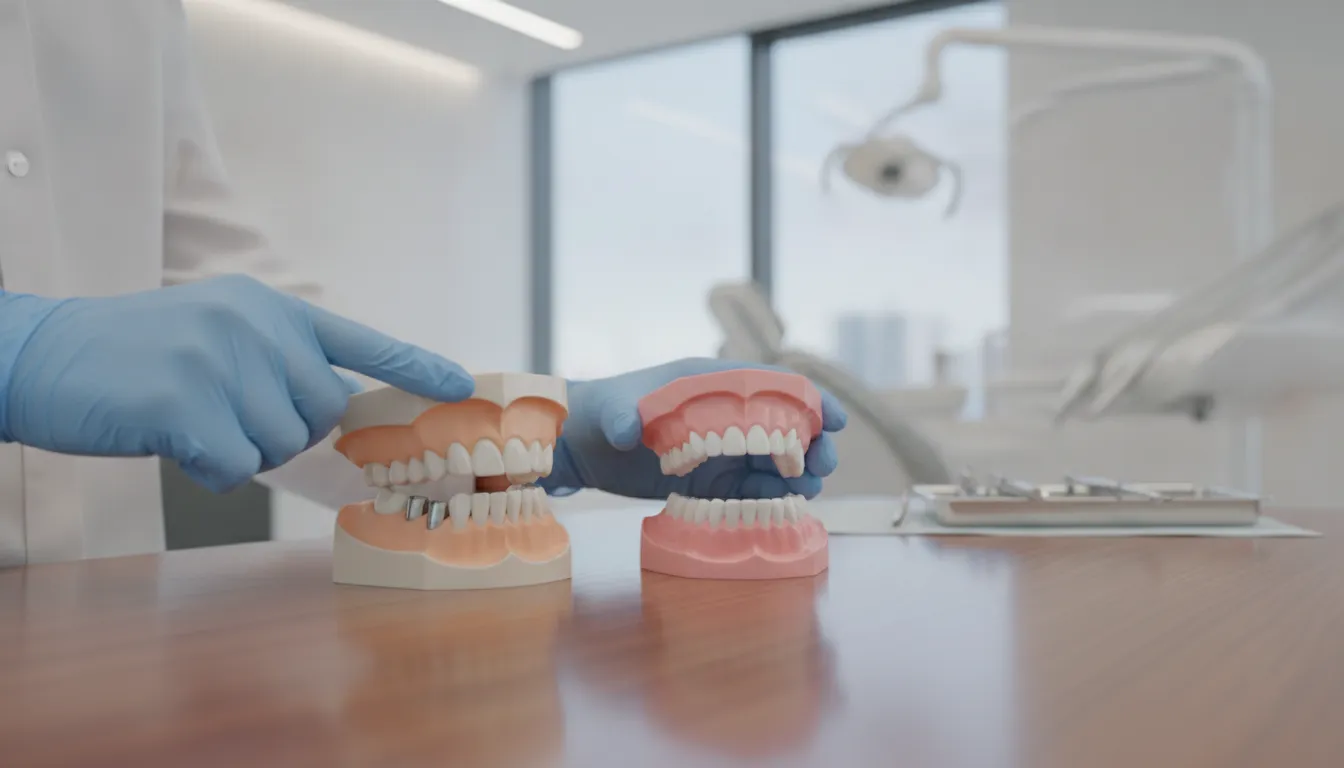
The central difference in All-on-4 vs dentures is how the replacement teeth are supported. Conventional dentures rest on the gums and are designed to be taken out. All-on-4 uses dental implants placed in the jaw to support a complete arch of prosthetic teeth. The prosthesis is fixed in place for the patient and is removed by the dental team for professional maintenance when needed.
A conventional denture can be a practical, appropriate solution for many people. It may suit someone who values removability, wants to avoid implant surgery, or has health or anatomical factors that make an implant-supported plan less suitable. Because it rests on the gums, however, its fit depends on the shape and condition of the oral tissues. Changes in the gums and underlying bone can affect retention over time, and some patients experience movement, rubbing, or the need for adhesive.
All-on-4 is a form of fixed, implant-supported full-arch treatment. The implants act as artificial tooth roots. In the classic concept, four implants are strategically positioned in the jaw. With the posterior implants angled to use available bone and help limit the length of the prosthetic extension. The exact number, position, and design must be determined through an examination and imaging, not selected from a general description of the technique. Clinical research on the All-on-4 concept describes this approach as supporting a provisional fixed prosthesis in carefully selected cases.
Unlike a conventional denture, an implant-supported prosthesis is secured by the implants rather than by suction or adhesive. Titanium implants can fuse with the jawbone through a process called osseointegration, which may provide a more stable foundation and reduce unwanted movement for appropriate candidates. This does not make treatment maintenance-free. Daily hygiene, professional follow-up, and attention to the gums and implants remain important.
Learning more about dental implant treatment can help you understand the surgical and restorative parts of the process. Ultimately, the better option depends on your anatomy, oral and general health, preferences, ability to maintain the prosthesis, and willingness to undergo surgery. A personalized evaluation is the only reliable way to compare conventional dentures with a fixed implant-supported plan.
For many patients, the practical difference comes down to how the prosthesis is supported during ordinary activities. Conventional dentures rest on the gums and rely on the fit of the denture base, the shape of the oral tissues, and in some cases adhesive or suction. They are removable, which can be an important advantage for people who prefer a non-surgical and reversible approach. Even a well-made denture may require periodic adjustment as the gums and supporting bone change over time.
All-on-4 uses implants beneath a fixed full-arch prosthesis. The implants provide an anchored foundation rather than asking the denture to stay in place through suction alone. Dental implants are designed to replace tooth roots, and the surrounding bone can heal closely around them to create support. This may reduce movement, clicking, or rubbing for some patients, but it does not make the treatment maintenance-free or guarantee a particular experience.
A removable denture can move when a person bites, chews, laughs, or speaks, particularly when the fit has changed. A loose denture can also irritate oral tissues and contribute to sores, which is one reason regular dental visits matter. The Mayo Clinic recommends professional evaluation of denture fit, comfort, cleaning, and oral health at intervals recommended by the dental team. Daily care also includes removing and cleaning the denture, then storing it appropriately, often in moisture overnight.
With All-on-4, the prosthesis is attached to implants, so patients generally do not remove it as part of their normal evening routine. That fixed design can make chewing and speaking feel more predictable, although adaptation still takes time. The final comfort depends on many details, including the bite, prosthesis design, soft-tissue condition, implant health, and the patient's healing response. Professional cleaning and regular follow-up remain necessary because bacteria can collect around implants and the bridge.
Conventional dentures may be comfortable when they fit well and are maintained appropriately. They can also be adjusted or replaced without implant surgery. All-on-4 may avoid some of the pressure and movement associated with a removable gum-supported denture, but implant treatment involves surgery, a healing period, and ongoing hygiene responsibilities. Bone, medical history, smoking, oral tissues, and willingness to attend follow-up visits all influence whether an implant-supported option is appropriate.
It is also helpful to distinguish All-on-4 from an implant-supported removable denture. Both use implants, but an implant-supported denture is designed to be removed by the patient, while All-on-4 is typically a fixed full-arch bridge. Learn more about how implant-supported dentures work before comparing that option with either conventional dentures or a fixed bridge.
An examination and imaging can clarify which type of support matches your anatomy, health, priorities, and comfort expectations. The goal is not to promise that one solution feels the same for every person. But to choose a design that can be maintained and used confidently over time.
The timeline differs because a conventional denture replaces visible teeth with a removable appliance, while an All-on-4 plan may involve surgery, healing, and a fixed final prosthesis. The sequence below is a general guide. Your examination, health history, anatomy, and goals determine which steps apply.
Candidacy depends on more than how many teeth are missing. The right path considers your jawbone, oral tissues, general health, hygiene habits, priorities, and willingness to pursue surgery. A person comparing All-on-4 vs dentures may be considering a fixed full-arch prosthesis, a removable conventional denture, or another option within the broader full-arch range. Conventional dentures can be a practical and appropriate choice for some patients, particularly when removability, budget, health, or personal preferences weigh against implant surgery.
For All-on-4, general screening considerations include missing most or all teeth, having enough healthy jawbone to support implants. And being able to commit to daily oral hygiene and professional follow-up. Health conditions, medications, or other factors that affect bone healing may change the risk profile or require additional planning. Tobacco smoking is also relevant to implant candidacy. A patient who currently smokes may need to stop or follow a personalized risk-reduction plan before treatment is considered.
Implant treatment requires an evaluation of the available bone and the condition of the gums and other oral tissues. Bone volume is only one part of the assessment. A clinician also reviews your medical history, medications, previous dental treatment, bite, and ability to maintain the proposed restoration. These details help determine whether All-on-4, another implant-supported approach, conventional dentures, or a staged plan is more appropriate.
Removability is an important preference to discuss openly. All-on-4 is designed as a fixed implant-supported full-arch prosthesis, while conventional dentures are taken out for cleaning and rest. Some patients value the feeling of a fixed restoration and are comfortable with surgery and long-term maintenance. Others prefer a removable option or need a plan that better fits their health circumstances and daily routine. Neither preference should be treated as a failure or a one-size-fits-all decision.
Screening concepts cannot determine eligibility on their own. A careful evaluation may include a comprehensive examination, medical-history review, three-dimensional CBCT imaging, digital impressions, and treatment planning. This process shows the clinician how anatomy and health factors relate to the proposed design. It also allows realistic discussion of hygiene, smoking, healing, maintenance, removability, and alternatives before you commit to treatment. For a broader explanation of dental implant candidacy and planning, review the related guide, then use an in-person examination to determine what applies to you.
Maintenance is part of the treatment decision, not an afterthought. With conventional dentures, daily care includes removing the prosthesis, gently cleaning it, and soaking it in an appropriate cleanser. Most dentures should remain moist overnight so they can retain their shape. Regular dental visits still matter because fit, comfort, oral tissues, and professional cleaning may need attention. A loose denture can contribute to irritation, sores, or infection, so adjustments should not be postponed.
A fixed All-on-4 bridge has a different routine. It cannot be removed by the patient, but it still requires careful daily brushing and cleaning beneath and around the bridge. Professional follow-up is also important for evaluating the implants, tissues, bite, and prosthesis. Implant treatment is not maintenance-free, and factors that may contribute to bone loss or inflammation need to be monitored over time. The practical question is which routine fits your dexterity, preferences, anatomy, and willingness to maintain the result.
| Consideration | Conventional removable dentures | Fixed All-on-4 bridge |
|---|---|---|
| Daily care | Remove, clean gently, and soak as directed; keep the denture moist overnight when appropriate. | Brush and clean around and beneath the fixed bridge, following the clinical team's instructions. |
| Follow-up | Visits can address fit, comfort, tissue health, and professional cleaning. | Visits monitor implant health, tissues, bite, hygiene access, and prosthesis condition. |
| Materials and adjustments | Fit and tooth arrangement may be adjusted or remade as oral conditions and goals change. | A temporary acrylic or PMMA bridge can be adjusted and customized during healing before a more definitive material, such as zirconia, is selected when clinically appropriate. |
The temporary bridge is an important part of thoughtful planning. A same-day temporary prosthesis is not the same as completing the final permanent bridge in one day. During the approximately three-to-six-month healing phase, the team can monitor healing, refine the bite, and evaluate appearance and function before creating the final restoration. That staged process can help the definitive design reflect what is learned during treatment rather than forcing every decision at the beginning.
Long-term value should therefore be discussed as individualized planning, not as a promise or a simple price comparison. Conventional dentures may be practical for a patient who values removability or cannot pursue implant surgery. All-on-4 may be considered when fixed support, implant candidacy, hygiene commitment, and staged restorative care align. A detailed evaluation, including imaging and medical-history review, helps clarify those tradeoffs. This guide to dental implant candidacy and planning offers broader context before an individualized discussion.
Contact Advanced Cosmetic and Implant Dentistry to discuss your full-arch options.
All-on-4 involves surgery, a healing period, and ongoing professional and daily hygiene maintenance. Candidacy depends on factors such as bone, oral tissues, general health, smoking, and willingness to commit to treatment. Implants can also develop complications, so treatment is not risk-free or automatically appropriate for everyone. Conventional dentures avoid implant surgery and remain removable, which may make them the more practical choice for some patients.
Comfort depends on anatomy, fit, healing, expectations, and the condition of the supporting tissues. Because All-on-4 is secured by implants rather than suction or adhesive, it may reduce movement and gum rubbing for an appropriate candidate. A conventional denture can also be comfortable when properly designed and adjusted, but a loose denture may cause irritation or sores. A clinical examination is needed to discuss your likely experience.
There is no useful single price for either option without reviewing the treatment plan. Compare the full scope, including examinations, imaging, extractions, temporary and final restorations, adjustments, maintenance, and replacement expectations. All-on-4 usually requires a larger initial investment because it includes surgery and implant-supported restorations, while conventional dentures may have different adjustment and replacement needs over time. Ask for a written, individualized estimate.
A fixed All-on-4 full-arch bridge is supported by implants and is not designed like a conventional removable upper denture with a broad palate-covering base. The exact design depends on your anatomy, implant position, speech and comfort needs, and restorative plan. Removable implant-supported options are a separate category, so confirm which prosthesis is being discussed before comparing roof coverage.
Removable dentures are taken out for daily cleaning and typically soaked as directed. While an All-on-4 restoration stays in place and requires careful brushing, cleaning beneath the bridge, and scheduled professional reviews. Implants are not maintenance-free. Bone and gum health, hygiene technique, the bite, and the prosthesis should be monitored over time. Your dentist will tailor the maintenance plan to the restoration and your oral health.
An individualized evaluation can help clarify whether All-on-4 or conventional dentures better fits your oral health, priorities, and preferences. The right choice depends on more than the type of restoration alone, so a thoughtful conversation can help you understand the next steps without pressure.
Patients in Hartford, CT, can experience unmatched quality and value by choosing board-certified doctors Avinash Bidra and Xiao Chun Li.
We are affiliated with the following prestigious organizations: