How are dental implants placed? The answer is a sequence of decisions and procedures, not just the moment an implant enters the jaw. Your dental team first evaluates your mouth and health, plans the position of the implant, and determines whether any preparatory care is needed. After placement, the implant needs time to heal before the final tooth or bridge is attached. The steps and timing depend on your anatomy, health, and the type of restoration planned.
Discuss your dental implant questions
The first stage is a conversation and examination. Your clinician asks what you hope to restore, whether a tooth is already missing or needs to be removed, and what concerns you have about comfort, appearance, chewing, or treatment. Bring a list of medications and relevant health conditions, along with information about previous dental work. Tell the team if you have had difficulty with dental procedures or have questions about sedation; your clinician can discuss what is appropriate for your situation.
The examination looks at the teeth, gums, bite, and the area being considered for an implant. The clinician may also review your general dental health and discuss habits or medical factors that could affect care. An implant is not selected from a photograph or a single measurement. The plan must account for the location of neighboring teeth, the shape of the jaw, the way your teeth meet, and the restoration that will eventually sit on the implant.
Use this visit to clarify the purpose of each proposed step. If a tooth is present, ask whether it can be preserved or whether extraction is recommended and why. If you are missing several teeth, ask whether the plan is for individual implants, an implant-supported bridge, or another option. You can learn more about the practice’s dental implant services and the clinicians’ backgrounds on the doctors’ page before or after your discussion.
Imaging helps the clinician assess the jaw and the structures around the proposed implant site. The specific records needed vary. They may include dental images, a three-dimensional scan, photographs, or digital impressions. These records help the team evaluate available bone, the shape of the site, and the relationship to nearby anatomical structures. They also help connect the planned implant position to the size and position of the future tooth.
The restoration should guide the plan, rather than being an afterthought. A crown needs room to emerge from the gum and meet the opposing teeth comfortably. The implant’s angle and depth are considered in relation to that final tooth, nearby teeth, the bite, and the available bone. For a bridge or full-arch restoration, the clinician considers the design and support needed across a wider area.

Planning may also identify a need for care before implant placement. For example, a tooth may need to be removed, or a site may need treatment to address its condition. Some patients need a procedure to improve the amount or shape of bone available for an implant. Others do not. These decisions depend on examination and imaging; a bone graft or any other preparatory procedure is not automatic.
Ask your clinician to explain what the images show and how those findings affect your options. If you want more detail about site preparation, read about bone grafting for dental implants. That discussion can help you distinguish an identified need from a step that may not apply to you.
Sometimes implant treatment begins after a tooth has already been lost. In other cases, the tooth is still present but cannot be predictably restored, and extraction may be part of the plan. The clinician considers the tooth’s condition, the health of the surrounding tissues, the shape of the site, and the intended restoration before recommending an order of treatment.
Extraction and implant placement may occur at separate visits or, in selected situations, as part of a coordinated procedure. The phrase “same-day implant” does not mean every patient can have an implant placed immediately after extraction, or that a permanent tooth is always attached that day. The clinician must determine whether the site and the planned restoration are suitable. The condition of the tooth and surrounding bone, the ability to position and stabilize the implant, and the overall treatment design all matter.
If preparatory care is needed, the team explains what it is intended to accomplish and how it changes the sequence. You may have a temporary way to replace a visible tooth while the area heals, depending on your plan. Ask what you should expect during that interval, how to care for the area, and whom to contact if you have a concern. Do not assume that a familiar protocol applies to your case simply because another patient had a different sequence.
Implant placement is a surgical procedure. Before it begins, the team reviews the plan and discusses comfort measures appropriate for the patient and procedure. The clinician prepares the site and places the implant body into the jaw at the planned location. An implant is a small post designed to support a later restoration; it is not the visible replacement tooth itself.
The exact technique depends on the site and treatment plan. A straightforward single-tooth case is different from a site that also requires extraction or bone-related care. If multiple implants are planned, their positions must work together with the bridge or full-arch restoration. Your clinician can describe the procedure planned for you, including what will happen to the gum tissue and whether a temporary restoration is part of the plan.
After placement, the implant may be covered by gum tissue or may have a healing component visible above it, depending on the approach. The team gives instructions for caring for the area and explains which symptoms should prompt a call. Follow those instructions and keep follow-up visits. Your experience after surgery is personal, so do not use someone else’s recovery or medication plan as a substitute for the guidance given to you.
Advanced Cosmetic and Implant Dentistry describes its model as providing surgical and restorative care in one practice, with an in-house laboratory. You can review the practice’s range of services and learn more about the practice. Ask which clinicians will be involved in your own care and how the surgical and restorative stages will be coordinated.
Learn about dental implant care
Following placement, the implant and surrounding bone need to heal. During this period, the bone may integrate with the implant surface, creating support for a restoration. Healing is a biological process, so the length of this stage varies. It can depend on the individual, the implant site, the treatment performed, and the clinician’s assessment at follow-up. There is no one schedule that can be promised for every patient.
A temporary tooth or bridge may be used during healing when it fits the treatment plan. A temporary restoration serves a different purpose from the final one. It may help maintain appearance or function while tissues heal, but it may have limits on how it should be used. Ask whether you will receive a temporary, what foods or activities to avoid, and how to clean around it. Do not assume that a temporary restoration can withstand the same forces as a final restoration.
Follow-up appointments let the clinician check the healing site and decide when it is appropriate to move forward. If the implant area is uncomfortable or you notice a change that concerns you, contact your dental team for advice rather than waiting for the next routine visit. The team can tell you whether you need an earlier assessment. For a broader explanation of recovery stages, see this guide to dental implant healing.
Once the clinician determines that healing is adequate for the next step, the implant is prepared to support the restoration. An abutment is a connecting component between the implant and the crown, bridge, or other prosthesis. Depending on the original surgical approach, a separate visit may be needed to expose the implant and attach a healing component or abutment. In other cases, part of the implant may already be accessible. Your clinician will explain the approach used in your case.
The restorative stage involves making or adjusting the tooth or prosthesis so that it fits the implant and your mouth. The team may take an impression or digital scan, assess the bite, and check the appearance and shape. A single crown is designed for one missing tooth. When several teeth are missing, an implant-supported bridge may replace a group of teeth. A full-arch restoration replaces most or all teeth in an arch and follows its own planning and maintenance needs.
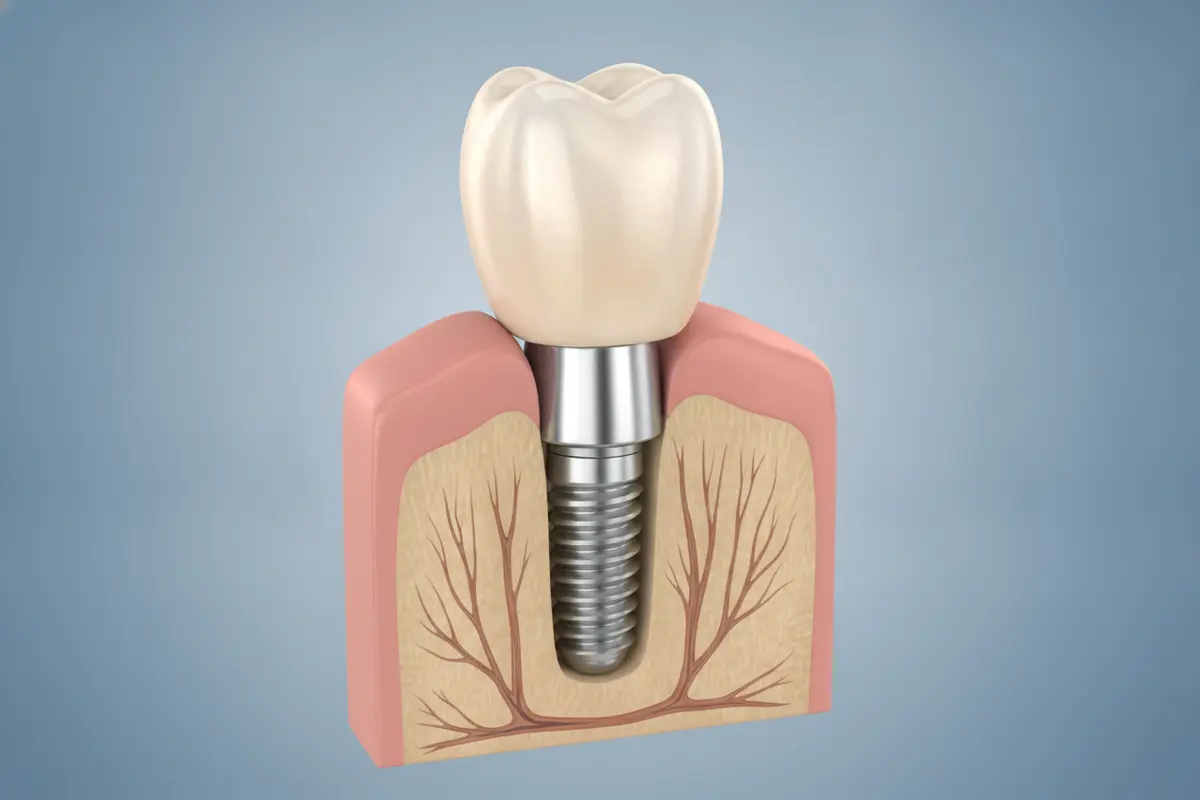
Before the restoration is considered complete, the clinician checks how it seats, how it contacts neighboring teeth, and how your bite feels. Adjustments may be made so the restoration is comfortable and works with the rest of your teeth. Ask what material is planned, how the restoration will be maintained, and what to do if it feels high or loose. If you are comparing replacement options, the practice also provides information about dental crowns and dental bridges.
The broad stages—assessment, planning, placement, healing, restoration, and follow-up—apply across implant care, but the number of teeth and the restoration design change the details. A single-tooth plan focuses on one site and how its crown will fit between neighboring teeth. Multiple missing teeth may be restored with more than one implant or a bridge supported by implants. A full-arch plan considers the entire arch, how the teeth meet, the shape of the prosthesis, and how it will be cleaned and maintained.
For full-arch treatment, the team discusses how any temporary restoration will be used during healing and how it differs from the final prosthesis. It is important to know which steps are planned for surgery, which relate to the temporary teeth, and which occur when the final restoration is ready. Do not assume a full-arch schedule from another person’s story will apply to you. Your treatment plan should identify the anticipated sequence and the decisions that depend on healing.
Review the relevant All-on-4 dental implant information if that option is being discussed. The exact approach should be based on your evaluation, not on a label alone. If you would like to see examples of restorative work, the practice’s before-and-after gallery offers additional context; examples cannot predict an individual result.
A clear plan helps you understand what will happen and where there may be decision points. Before agreeing to treatment, consider asking:
Written information can make these conversations easier. Ask for the proposed sequence, the planned restoration, any expected temporary, and the follow-up plan to be explained in language you understand. If cost or payment is part of your decision, the practice has a page about dental implant costs and information on financing and insurance. Confirm what applies to your specific treatment rather than relying on a general estimate.
For general oral health information, the American Dental Association is a professional resource. Questions about your particular diagnosis, images, and treatment sequence are best answered by the clinician who has evaluated you.
Explore dental implant treatment options
Implant placement may be one part of a treatment plan, but the entire process often includes planning, healing, and a later restoration. Whether extraction and implant placement can be coordinated in one visit depends on the clinical findings and planned restoration. Ask your clinician which steps are expected to happen at each appointment in your case.
Comfort and recovery vary from person to person and by procedure. Your dental team can discuss the anesthesia or other comfort measures appropriate for your treatment and give you instructions for aftercare. Tell the team about concerns or previous experiences so they can address them before the procedure.
There is no single timeline for every patient. The time between placement and a final restoration depends on the site, the procedures performed, and how healing progresses. Your clinician can outline an expected sequence and explain what needs to be checked before moving to the next stage.
Some plans include a temporary restoration, while others do not. A temporary may have specific use and care limits, and it is not necessarily the final tooth. Ask in advance whether a temporary is planned and how to protect it during healing.
The overall phases are similar, but a full-arch restoration involves different planning, multiple support points, and a prosthesis designed for an entire arch. The temporary and final restorations may also have different roles. Your clinician should explain your specific sequence and how it differs from a single-tooth case.
Understanding the stages can help you prepare questions, but an examination and appropriate imaging are needed to create a plan for your mouth. Advanced Cosmetic and Implant Dentistry provides implant and restorative care in Glastonbury, Connecticut. To discuss an evaluation or ask about the steps involved, send the practice a message.
Review dental implant services
Your dental team can explain which steps apply to you and what to expect as treatment progresses.
Patients in Hartford, CT, can experience unmatched quality and value by choosing board-certified doctors Avinash Bidra and Xiao Chun Li.
We are affiliated with the following prestigious organizations: